
For many couples, reciting traditional wedding vows that reflect their faith is the most important part of the wedding ceremony. Incorporating traditional vows and ceremonies that have been passed down over the course of generations is a beautiful way to engage in history and make your wedding even more deeply meaningful.
In this article, the wedding-planning experts at Minted have compiled wedding vows examples from a wide range of faiths for you to explore as you plan a wedding ceremony that is a true reflection of you and your partner.
Traditional Christian Wedding Vows
Traditional Christian wedding vows can vary by denomination, but all follow the same structure. Each partner will make a promise to God and to the other person that they will stay committed to them through life's ups and downs. Below, we’ve provided a few of the most common traditional Christian wedding vows.
Baptist Vows
Officiant: “Will you, ________, have ________ to be your husband/wife? Will you love him/her, comfort and keep him/her, and forsaking all others, remain true to him/her as long as you both shall live?"
Wedded couple (together or individually): “I will.”
Church of England Vows
“I,________, take you, ________,
to be my wife/husband,
to have and to hold from this day forward;
for better, for worse,
for richer, for poorer,
in sickness and in health,
to love and to cherish,
till death us do part,
according to God's holy law.
In the presence of God, I make this vow.”
Presbyterian Vows
“I, ________, take thee ________, to be my wedded husband/wife, and I do promise and covenant, before God and these witnesses, to be thy loving and faithful wife/husband; in plenty and in want, in joy and in sorrow, in sickness and in health, as long as we both shall live.”
Photo by Dear Kodak
Methodist Vows
“I take you, ________, to be my husband/wife from this day forward, to join with you and share all that is to come, and I promise to be faithful to you of God and this congregation to declare your intent.”
Catholic Vows
“I, ________, take you, ________, for my lawful wife/husband, to have and to hold from this day forward, for better, for worse, for richer, for poorer, in sickness and health, until death do us part.”
Protestant Vows
“In the presence of God and before our family and friends,
I, ________, take you, ________, to be my [wife/husband]
all that I am I give to you, and all that I have I share with you.
Whatever the future holds, I will love you and stand by you, as long as we both shall live.”
Lutheran Vows
“I take you, ________, to be my [wife/husband] from this day forward, to join with you and share all that is to come, and I promise to be faithful to you until death parts us.”
Unitarian Vows
“I, ________, take you, ________, to be my [wife/husband] of my days, to be the parent of my children, to be the companion of my house. We will keep together what measure of trouble and sorrow our lives may lay upon us, and we will share together our store of goodness and plenty and love.”
Traditional Nondenominational or Standard Wedding Vows
Most Western traditional nondenominational and secular wedding vows take their cues from the Christian wedding vows we just shared. If you choose to go this route, you can incorporate the parts of traditional vows that ring true to you, and leave behind what doesn’t. Here are a few examples of standard wedding vows:
Standard Vows
Example 1:
“I ________, take thee ________, to be my [wife/husband].
To have and to hold,
in sickness and in health,
for richer or for poorer,
and I promise my love to you forevermore.”
Example 2:
Officiant: "________, do you take ________ to be your husband; to live together with him in the covenant of marriage? Do you promise to love him, comfort him, honor and keep him, in sickness and in health; and, forsaking all others, to be faithful unto him as long as you both shall live?"
Bride: "I do."
Officiant: "[groom's name], do you take [bride's name] to be your wife; to live together with her in the covenant of marriage? Do you promise to love her, comfort her, honor and keep her, in sickness and in health; and, forsaking all others, to be faithful unto her as long as you both shall live?"
Groom: "I do."
Civil Ceremony Vows
“I ________, take you, ________, to be my lawfully wedded [wife/husband]. Before these witnesses, I vow to love you and care for you as long as we both shall live. I take you with all of your faults and your strengths as I offer myself to you with my faults and strengths. I will help you when you need help, and I will turn to you when I need help. I choose you as the person with whom I will spend my life.”
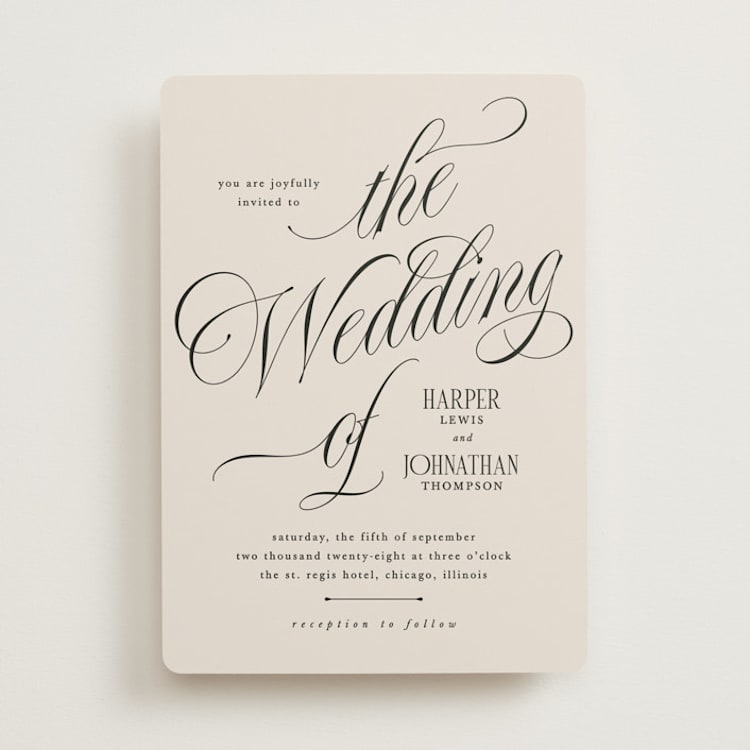
Celtic Vows
Even if you aren’t Scottish, Celtic vows are a beautifully romantic tradition that can inspire your nondenominational vows.
“I take you my heart
at the rising of the moon
and the setting of the stars.
To love and to honor
through all that may come.
In all our lives,
may we be reborn
that we may meet and know
and love again,
and remember.”
Interfaith Vows
At its core, marriage is the merging of two lives into one — and each interfaith couple can choose how they’d like to blend their religious traditions and beliefs into a marriage ceremony. Here are two examples of how interfaith vows might be read.
Example 1:
“I, ________, take you, ________, into my hand, heart, and spirit in the name of the spirit of God that resides within us all, and the love that resides inside my heart.”
Example 2:
“Our love has brought us back to the worlds we knew as children. I have a great amount of respect and admiration for your beliefs, even though I am not a part of them. We've promised to spend the rest of our lives together as adults, and I promise to respect your views as you do mine.”
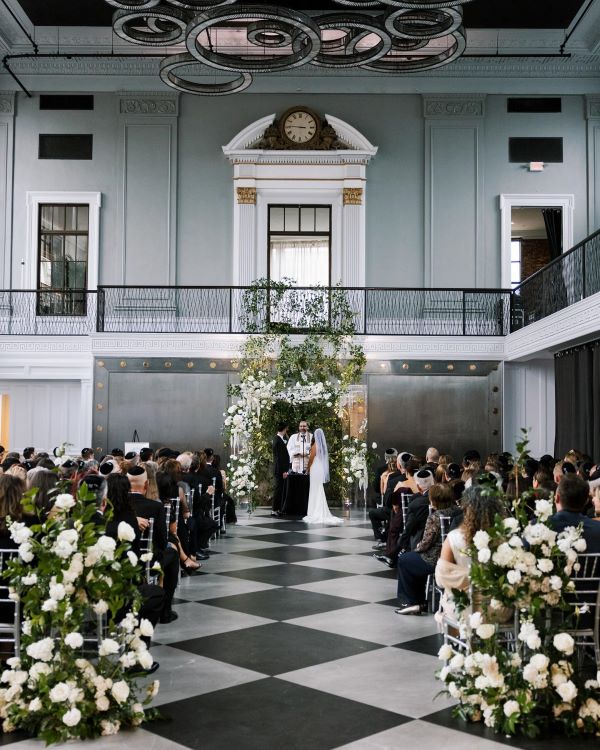
Photo by Afrik Armando
Traditional Jewish Wedding Vows
Wedding vows are not a historical part of Jewish wedding traditions. Instead, the following words serve as a vow during the ring exchange portion of the ceremony:
Groom to the bride: “Harey at mekuddeshet li B'taba'at zo k'dat Moshe V'israel.” (Which means, “Behold, thou are consecrated unto me with this ring according to the law of Moses and of Israel.”) The groom will then place the ring on the bride’s finger.
That said, modern Jewish couples are increasingly opting to include vows alongside other, more traditional, elements of their ceremony. Here are a few examples of what these vows might sound like:
Reform Vow
Officiant: “Do you, ________, take you, ________, to be your [wife/husband], promising to cherish and protect [her/him], whether in good fortune or in adversity, and to seek together with [her/him] a life hallowed by the faith of Israel?”
Bride/groom: “I do.”
Conservative Vow Example
Officiant: “Do you, ________, take you, ________, to be your lawfully wedded [wife/husband], to love, to honor, and to cherish?”
Bride/groom: “I do.”
Modern Vow Example
“With this ring, you are made holy to me, for I love you as my soul.
You are now my [wife/husband].”
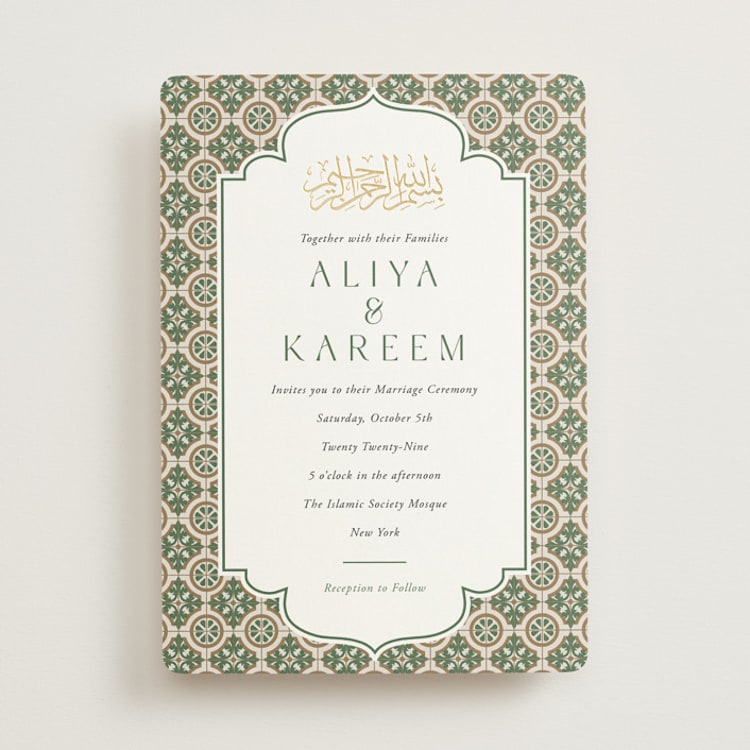
Traditional Muslim Wedding Vows
Known as the Nikah, Muslim wedding ceremonies are steeped in tradition and meaning. In addition to saying the vows below, during the ceremony, the couple will convey their willingness to marry by being asked three times if they accept each other as husband and wife and agree to the terms of the marriage contract. Each time, they respond by saying “I accept” in Arabic.
Bride’s Vows
“I, ________, offer you myself in marriage in accordance with the instructions of the Holy Quran and the Holy Prophet, peace and blessing be upon him. I pledge, honestly and with sincerity, to be your obedient and faithful wife.”
Groom’s Vows
“I, ________, pledge, in honesty and sincerity, to be your faithful and helpful husband.”
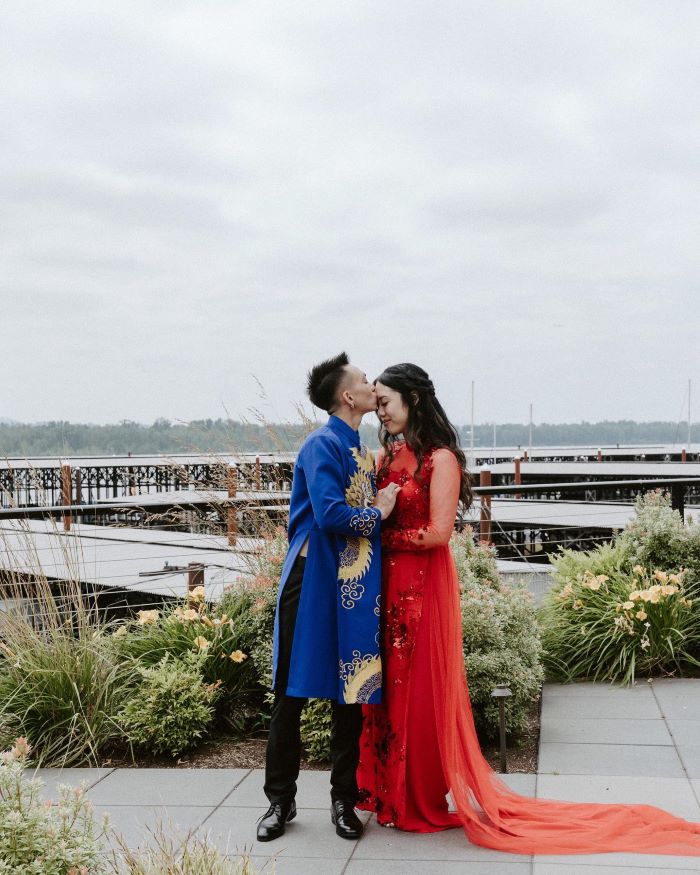
Photo by Analy Photo
Traditional Buddhist Wedding Vows
Unlike in many other religions, Buddhist wedding vows do not need to be recited out loud. The couple may choose to read them silently or they can speak them aloud for the benefit of their guests.
Buddhist wedding ceremonies also include individual vows, in which each member of the couple responds with “I do,” and joint vows, in which the couple responds together with “we do.” Below, we’ve included examples of both types of vows.
Individual Vows
“I, ________, take you, ________, to be my husband/wife, my partner in life, and my one true love. I will cherish our friendship and love you today, tomorrow, and forever. I will trust you and honor you, I will laugh with you and cry with you. Through the best and the worst, through the difficult and the easy. Whatever may come, I will always be there. As I have given you my hand to hold, so I give you my life to keep.”
Joint Vows
Officiant: “Recognizing that the external conditions in life will not always be smooth and that internally your own minds and emotions will sometimes get stuck in negativity. Do you pledge to see all these circumstances as a challenge to help you grow, to open your hearts, to accept yourselves, and each other, and to generate compassion for others who are suffering? Do you pledge to avoid becoming narrow, closed, or opinionated, and to help each other to see various sides of situations?”
Wedded couple: “We do.”
Officiant: “Understanding that just as we are a mystery to ourselves, each other person is also a mystery to us. Do you pledge to seek to understand yourselves, each other, and all living beings, to examine your own minds continually, and to regard all the mysteries of life with curiosity and joy?”
Wedded couple: “We do.”
Officiant: “Do you pledge to preserve and enrich your affection for each other, and to share it with all beings? To take the loving feelings you have for one another and your vision of each other's potential and inner beauty as an example, and rather than spiraling inwards and becoming self-absorbed, to radiate this love outwards to all beings?”
Wedded couple: “We do.”
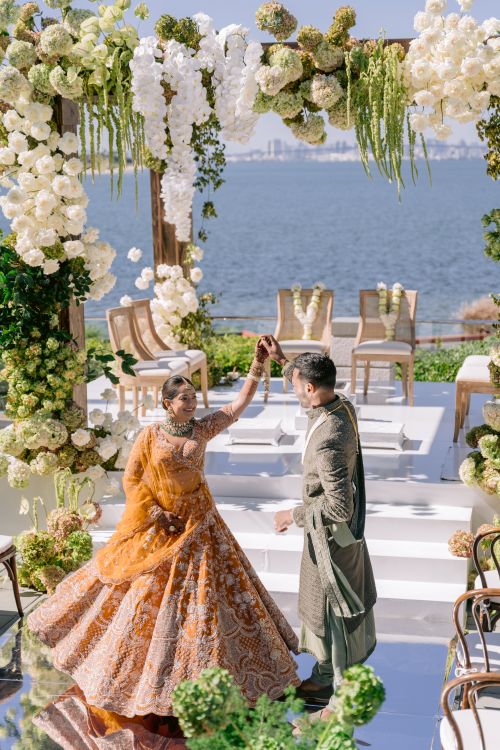
Photo by Inloveness Photography
Traditional Hindu Wedding Vows
Traditional Hindu wedding vows are known as the saptapadi (meaning seven vows) and are chanted by the couple as they take seven mangal pheras (meaning steps) around a sacred fire.
Here is what they typically include (note that vows will traditionally be said in Hindi and may be translated to English by an MC for the benefit of those who do not speak Hindi):
Vow 1: “Let us take the first step to provide for our household a nourishing and pure diet, avoiding those foods injurious to healthy living.”
Vow 2: “Let us take the second step to develop physical, mental, and spiritual powers.”
Vow 3: “Let us take the third step to increase our wealth by righteous means and proper use.”
Vow 4: “Let us take the fourth step to acquire knowledge, happiness, and harmony by mutual love and trust.”
Vow 5: “Let us take the fifth step so that we are blessed with strong, virtuous, and heroic children.”
Vow 6: “Let us take the sixth step for self-restraint and longevity.”
Vow 7: “Finally, let us take the seventh step and be true companions and remain lifelong partners by this wedlock.”
Frequently Asked Questions about Traditional Wedding Vows
Who says wedding vows first? The bride or the groom?
In a traditional wedding, the groom is usually the one to say his vows first. But today, either part of the couple has the option of saying their vows first. This preference on vows varies depending on what you select as a couple, your beliefs, what your officiant recommends, or the order of events you choose.
How long should it take to say traditional wedding vows?
Traditional wedding vows last between 30 seconds and three minutes on average. While this is ultimately your opportunity to express your sentiments to your future spouse, it's polite to keep track of the time. Your wedding planner can help you plan them properly so you can stick to your pre-planned timeline.
Can You Personalize Traditional Wedding Vows?
The level to which you can personalize your vows depends on which tradition you plan to follow for your wedding ceremony. For example, if your wedding is being held in a place of worship and officiated by a minister of a more orthodox religion, you may not be able to personalize traditional wedding vows at all.
If you plan to get married in a church, synagogue, mosque, or temple, be sure to ask about officiating practices when touring the venue to get a sense of how much you’ll be able to put a personal spin on the ceremony if that is important to you.
How to Write Traditional Wedding Vows?
If your officiant allows couples to customize their own vows, then it is up to you to write what you’d like to say. When writing, keep these things in mind:
- Length: Aim to stay under three minutes, and keep anecdotes or stories about your soon-to-be spouse short.
- What is important to you: Preserve the aspects of traditional wedding vows that resonate with you, and skip what doesn’t.
- Make a promise: Vows are about setting an intention for your marriage, so don’t forget to make a promise to your partner about how you’ll show up for them.
Want more vow writing tips? Check out our full guide to writing wedding vows and download our wedding vows worksheet.
The Perfect Way to Say I Do
No matter what faith you practice, reciting traditional wedding vows to your partner in front of your closest family and friends is a powerful way to begin your marriage. We hope these examples gave you plenty of inspiration for your own wedding ceremony, and made you even more excited to say “I do!”