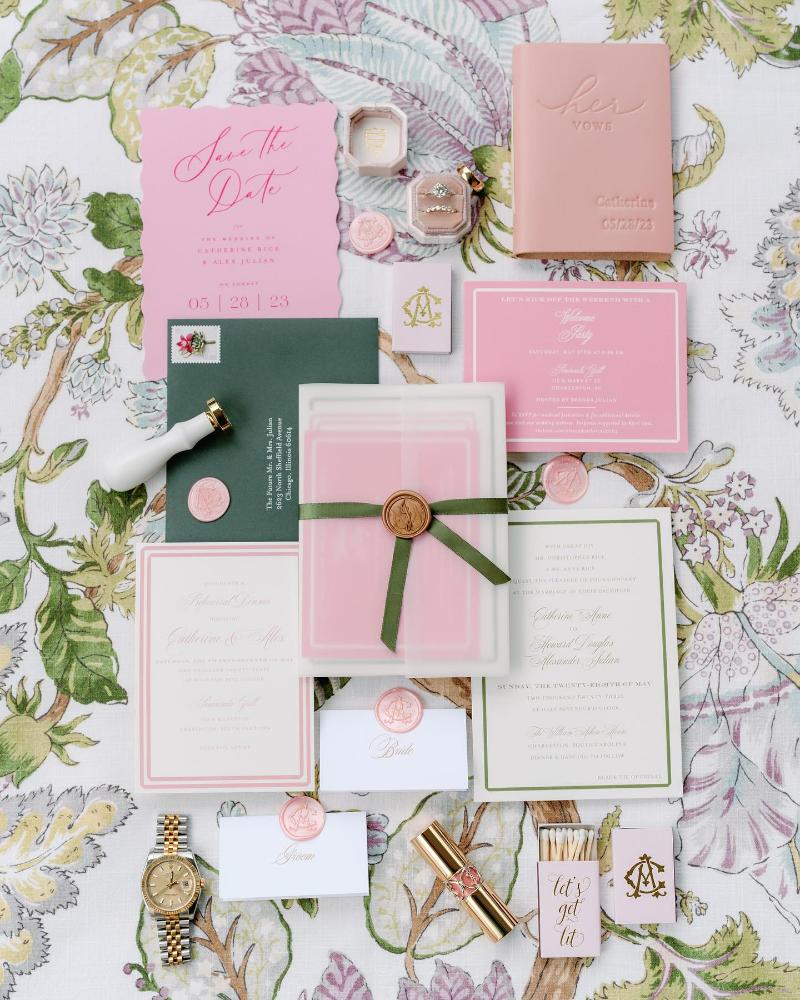

Key Takeaways:
- Wedding invitation postage depends on weight, shape, and embellishments—square envelopes and wax seals require surcharges beyond the standard First-Class letter rate.
- Rectangular envelopes and lightweight suites keep costs down and avoid the non-machinable surcharge.
- Multi-piece suites with reply cards and inserts often hit 2–3 oz, which increases your per-invitation postage cost.
The little things make your wedding memorable—even the mundane little things, like nailing down exact postage before you mail 150 invitations. The good news is that postage is not something that needs to stress you out!
Postage mistakes are completely avoidable. Whether you're mailing a minimalist single-card invitation or a layered suite complete with vellum wraps and ribbon, this guide walks you through everything you need to know.
Minted's wedding invitation collection offers options for every postage budget, from standard rectangles to statement squares that are worth the extra stamp.
Wedding Invitation Postage Rates: The Basics
Understanding wedding invitation postage rates comes down to four factors: weight, size, thickness, and whether your suite qualifies as non-machinable. Get all four right, and you'll avoid surprises at the counter!
The current First-Class letter rate (which $0.78 as of early 2026) covers slim, single-card suites in standard rectangular envelopes. But weight and bulk accumulate quickly once you start layering in RSVP cards, enclosure cards, and special touches like envelope liners. Here's what to check before ordering stamps:
- Standard rectangles start at the base rate: Single-card invitations in A7 or A9 rectangular envelopes typically qualify for First-Class letter postage—but only if they stay under 1 oz and remain flexible enough to bend.
- Multi-piece suites get expensive fast. Once you add reply cards, direction inserts, tissue paper, and envelope liners, your suite can easily jump to 2–3 oz. Each additional ounce increases postage.
- Thickness triggers surcharges. Stiff, layered invitations—even lightweight ones—can't go through sorting machines. If your suite won't bend easily (which can be the case if you opt for a rigid cardstock like our Double Thick or Triple Thick, expect a non-machinable fee on top of the base rate.
- Always test a complete sample first. Assemble one full invitation with every insert and embellishment, then take it to the post office. Postal workers will weigh it, test for flexibility, and tell you the exact postage—no guessing required.
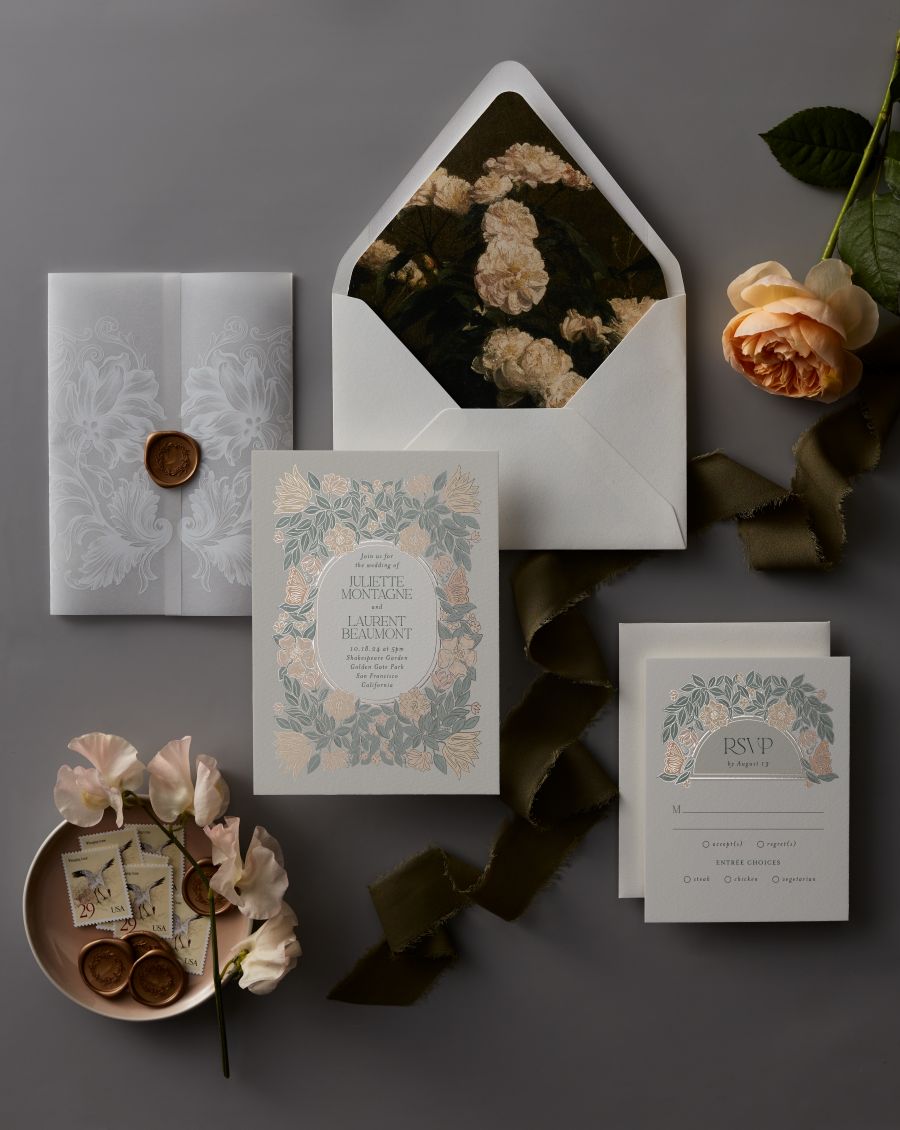
Holiday Wreath in Gold wax seal by Mealine Kosuge, Still-life Floral envelope liners by Studio Lavender, Tropical Garden invitation and Tropical Garden RSVP card by Simona Camp
Non-Machinable Wedding Invitations
When invitations can't go through USPS sorting machines, they become non-machinable mail and require a surcharge on top of the base rate.
Common culprits include:
- Wax seals that create rigid, uneven surfaces
- Thick ribbon or twine wrapped around the envelope
- Stacked layers that make the envelope too stiff to bend
- Uneven thickness from dimensional embellishments
Here's the quick test: if your envelope won't flex easily, it's likely non-machinable. Ask for a "bend test" at the counter—postal workers can confirm whether your suite needs hand-processing.
Budget the non-machinable surcharge per envelope so you don't under-stamp. That gorgeous wax seal is absolutely worth it, but factor in the extra cost when calculating your total wedding invitation budget.
Square Envelope Postage
Square envelopes are ideal for making a statement. However, they are slightly more expensive to mail because squares are always non-standard — USPS treats all square mail as non-machinable, regardless of weight or thickness.
If you love the look of square envelopes, there is a workaround you can try out. Place your square invitation inside a rectangular outer envelope to avoid the surcharge while keeping that modern aesthetic.
How to Weigh Wedding Invitations
Weighing your invitations accurately prevents postage headaches down the line.
Like we already mentioned, assembling one complete suite and taking it to the post office is the most foolproof way to determine the postage you need. But if you can’t make it to your local USPS, you can also use a kitchen scale that measures to the nearest 0.1 oz for precision. If your suite lands at 1.1 oz, you're paying for 2 oz postage, so round up to the next ounce for safety when calculating costs.
Weight tiers to keep in mind:
- Under 1 oz: Standard First-Class letter rate
- 1.1–1.9 oz: Additional-ounce rate applies
- 2.1–3.5 oz: Multiple additional-ounce charges
- Over 3.5 oz: Large envelope pricing kicks in
Be extra careful with heavier formats. Some single-card combinations—especially on luxe cardstock or with a printed liner—hover right around 1.0 oz. Even small additions like a wax seal or belly band can push you into the next tier.
Weigh your suite before ordering stamps, and weigh again if you make any changes to paper stock or add embellishments later.
Using Postage Calculators for Invitations
Online postage calculators give you a helpful starting estimate before heading to the post office.
- Start with an accurate weight. Use your kitchen scale to weigh a complete, assembled suite, then enter that weight into the calculator.
- Factor in shape. Most calculators ask whether your envelope is rectangular or square. Answer honestly—squares trigger surcharges even for lightweight mail.
- Treat results as a pre-check. Calculators provide estimates, but confirm final pricing in person for odd shapes, thick suites, or embellished envelopes.
Recalculate if you change paper stock, add a liner, or switch to a wax seal after your initial estimate. Small changes can shift you into a different pricing tier.
USPS offers a postage price calculator on their website that accounts for weight, dimensions, and mail class.
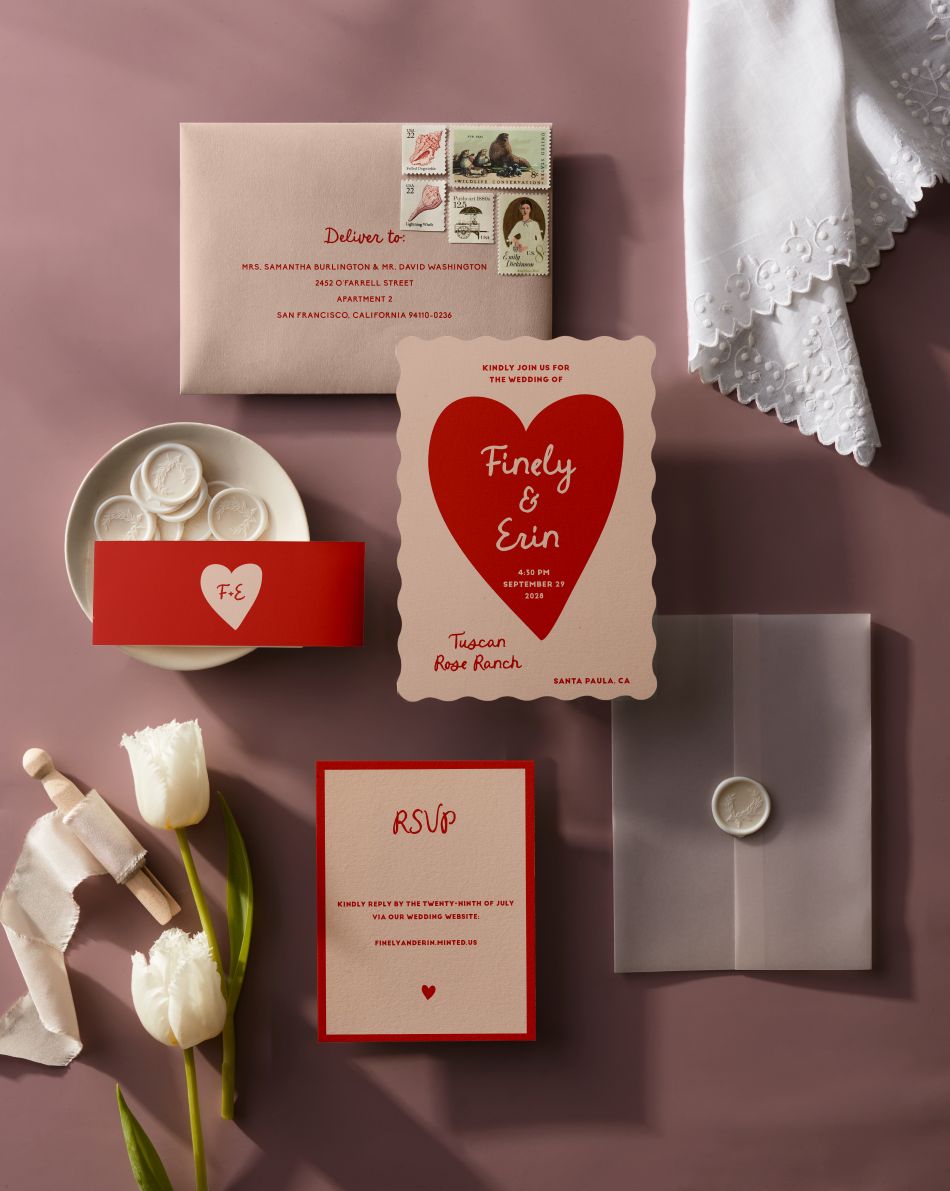
Big Heart Wedding invitation, RSVP online enclosure card, and belly band by Ani Somi, Vellum Wrap by Minted, and Crest in Pearl White wax seals by Pink House Press
Choosing Wedding Stamps That Fit Your Style and Budget
Your stamps are part of your invitation's first impression, so treat them like any other design element. The goal is to hit your exact postage amount without cluttering the envelope corner. Here are our top tips for doing just that:
- Calculate your total postage first: Add up the base rate plus any additional-ounce or non-machinable surcharges. Once you know the exact amount, choose stamp denominations that reach that total cleanly. A Forever stamp paired with one or two additional-ounce stamps looks intentional. Five mismatched low-value stamps stacked in the corner? Not so much.
- Make stamps part of your design: Vintage stamps add personality and can tie into your wedding colors or theme. Minted's postage collection offers curated options that complement wedding stationery without overwhelming your envelope design.
- Order 10% extra: You'll need spares for addressing mistakes, last-minute guest additions, and a few stamped envelopes to save as keepsakes. Running out mid-assembly is frustrating and delays mailing.
- Verify rates before buying in bulk: Postage rates change periodically, and what you calculated six months ago might not be accurate now. Confirm your exact postage at the post office before purchasing your full stamp order.
Save the Date Postage
Save the dates are typically the easiest piece of wedding mail to send.
- Most save the dates qualify for the standard letter rate. Single-card mailers on lightweight cardstock usually stay well under one ounce.
- Skip bulky add-ons. Keep save the dates flat and simple to avoid surcharges. Save the embellishments for your invitation suite.
- Mail early, then adjust. Send save the dates 6–8 months before your wedding, then update your invitation quantities after any address changes or guest list shifts.
Postcards are a popular save the date format and cost less to mail than envelopes. Just confirm your design meets USPS postcard dimension requirements before printing.
RSVP Card Postage
Making it easy for guests to respond means pre-stamping their reply envelopes at the correct rate.
If you're including mailed RSVPs in your invitation suite, add a stamp to each reply envelope before stuffing your suites. Most RSVP cards and envelopes qualify for standard letter postage, but weigh a complete reply (card inside envelope) to confirm.
Postcards cost less than envelopes if your design meets postcard standards—typically 4" x 6" or smaller, printed on cardstock of appropriate thickness. Check USPS requirements before printing to ensure your postcards qualify for the lower rate.
Consider digital RSVPs as a backup. Including your wedding website URL on the reply card gives guests options and ensures you capture responses even if envelopes go missing.
International Wedding Invitation Postage
Mailing invitations overseas requires extra planning and different postage altogether.
International letters have their own rate structure—verify costs by destination country at the post office counter. Rates vary significantly, so don't assume one international stamp covers all locations.
A few considerations for overseas mail:
- Simplify embellishments. Remove or reduce thick layers, wax seals, and dimensional elements that might trigger surcharges or risk damage during longer transit times.
- Allow extra time. Mail international invitations 1–2 weeks earlier than domestic ones to account for customs processing and extended delivery windows.
- Track when possible. For peace of mind, consider sending international invitations with tracking or delivery confirmation.
Before sending, always double-check addresses for international formatting requirements. Many countries use different address structures than the US does, and proper formatting helps ensure delivery.
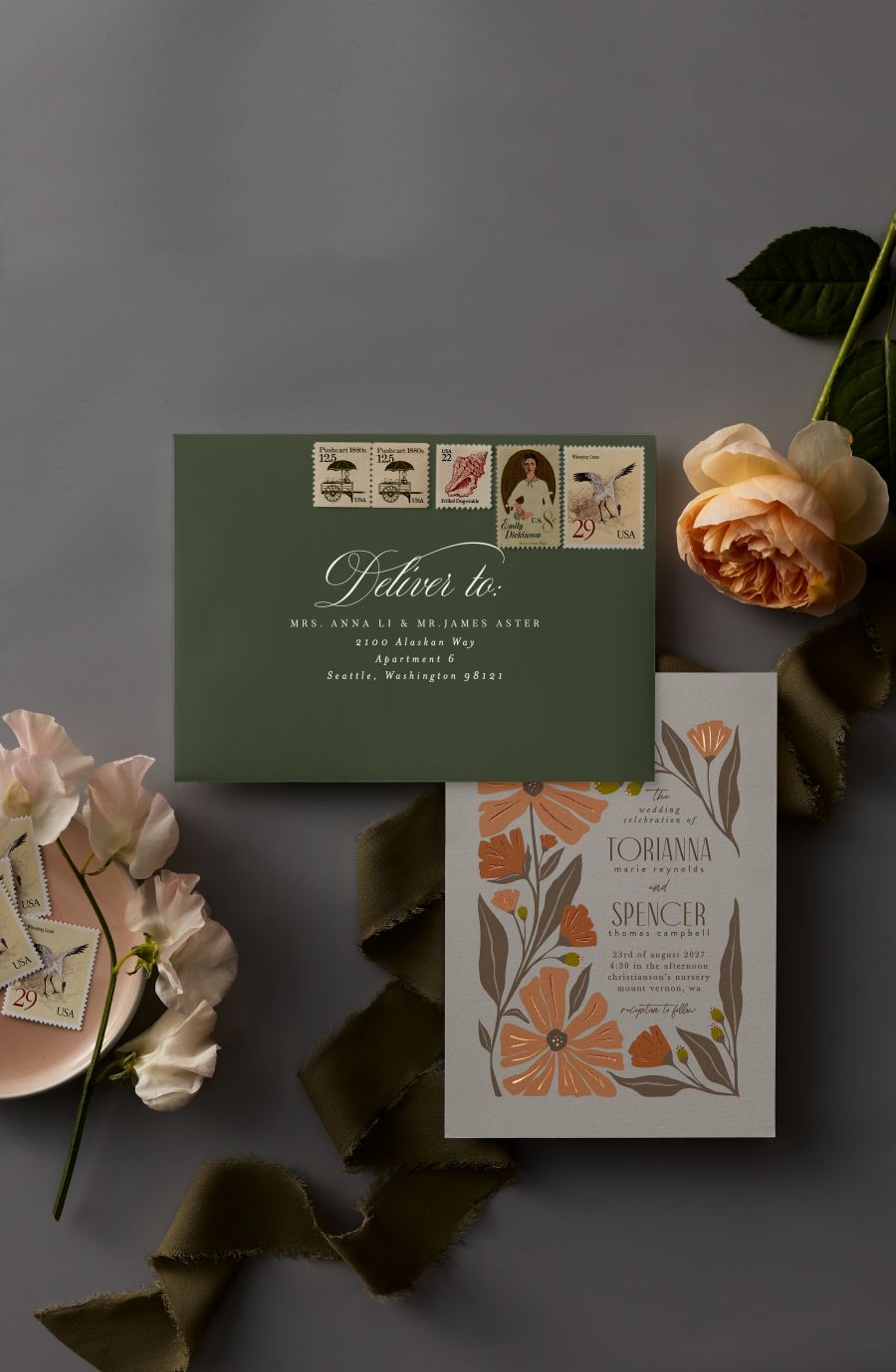
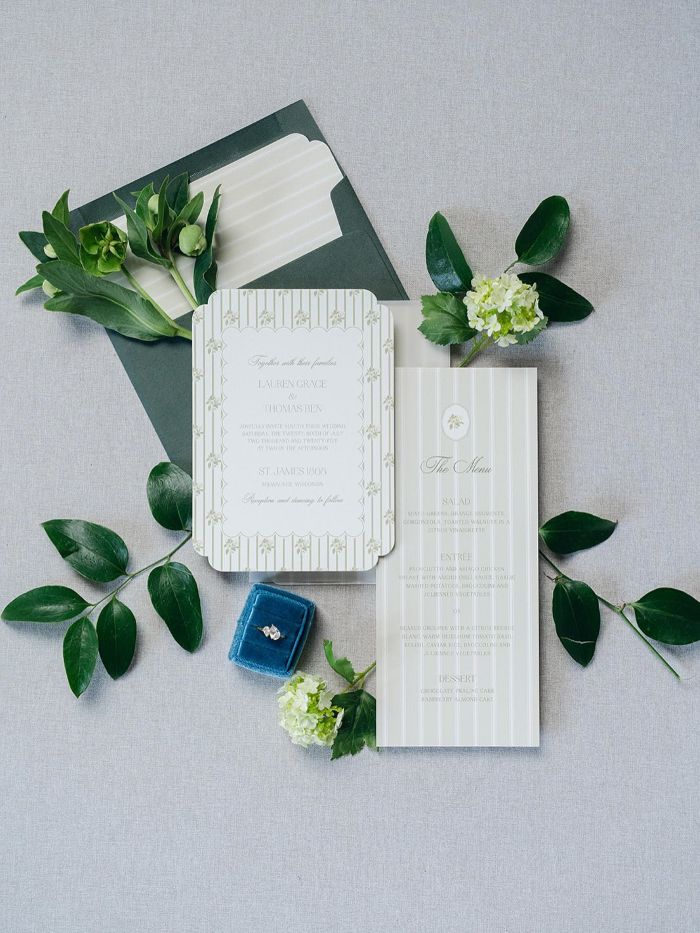
Storybook Garden invitation by Karidy Walker
Post Office Tips for Wedding Mail
A little preparation makes your post office visit smooth and efficient. Here’s what to do:
- Bring one fully assembled sample. Have the clerk weigh and price your complete suite before buying stamps for the whole batch.
- Ask for a non-machinable quote. If your invitations include wax seals, ribbon, or thick layers, specifically request pricing that includes the surcharge.
- Confirm hours and services. Some branches process hand-canceling only at certain times or on specific days.
- Mention non-standard options. Let the clerk know if you're using square envelopes, layered suites, or very thick cardstock so they can confirm whether your invitations still qualify as letters.
- Avoid peak hours. Visit mid-morning on weekdays for shorter lines and more one-on-one assistance.
Postal workers see wedding mail regularly and can spot potential issues before they become problems. Use their expertise to your advantage!
Addressing Wedding Envelopes for Mailing
Clear, correctly formatted addresses ensure your invitations arrive without issue. Use high-contrast ink—dark ink on light envelopes, or consider white ink for darker envelope colors—and consider using Minted's free recipient addressing service. Printed addresses eliminate handwriting inconsistencies and reduce delivery errors. But regardless of whether you print or handwrite, keep addresses within USPS address zones so sorting machines can read them.
The most common reason for returned mail? Missing apartment or unit numbers. Before mailing, verify every address includes secondary address information where applicable. A quick address audit catches errors that would otherwise bounce invitations back to you weeks later.
Hand-Canceling Wedding Invitations
Hand-canceling means postal workers manually stamp your envelopes instead of running them through sorting machines. This gentler process protects delicate elements from damage. Not all post office branches offer hand-canceling—call ahead to confirm availability. Policies and procedures vary by location, so ask about any specific requirements when you call.
Hand-canceling works especially well for:
- Dark envelopes where machine ink might not show cleanly
- Addresses written in calligraphy that you want to protect from scuffing
- Wax seals or dimensional elements that could crack or catch in machines
Hand-canceling takes longer than machine processing, and some branches only offer the service during certain hours. Build in extra time into your invitation planning if you plan to have your invitations hand-canceled, and know that a small fee may apply depending on location.
If your branch doesn't hand-cancel, consider mailing at a quieter post office where staff have more time to assist.
Avoiding Returned Wedding Invitations
Nothing derails wedding planning momentum like a stack of returned invitations. A quick audit catches issues before mailing. Run through this checklist for every envelope:
- Weight: Does the postage match the actual weight?
- Size and shape: Are surcharges accounted for?
- Rigidity: Will non-machinable items trigger returns?
- Postage amount: Is the correct total applied?
- Address clarity: Is every line legible and complete?
- Secure seals: Is each envelope completely and firmly sealed?
Spot-check 5–10 envelopes at the post office counter before mailing all of them. Clerks can flag problems you might miss.
If envelopes do come back, don't panic! Address the issue, use fresh envelopes with correct postage, and re-mail promptly. (And, if you’re running short on time, reach out directly to those guests whose invitations have been returned to give them a heads up that more information about your big day is coming. This can help ensure you still get their RSVP response promptly.)
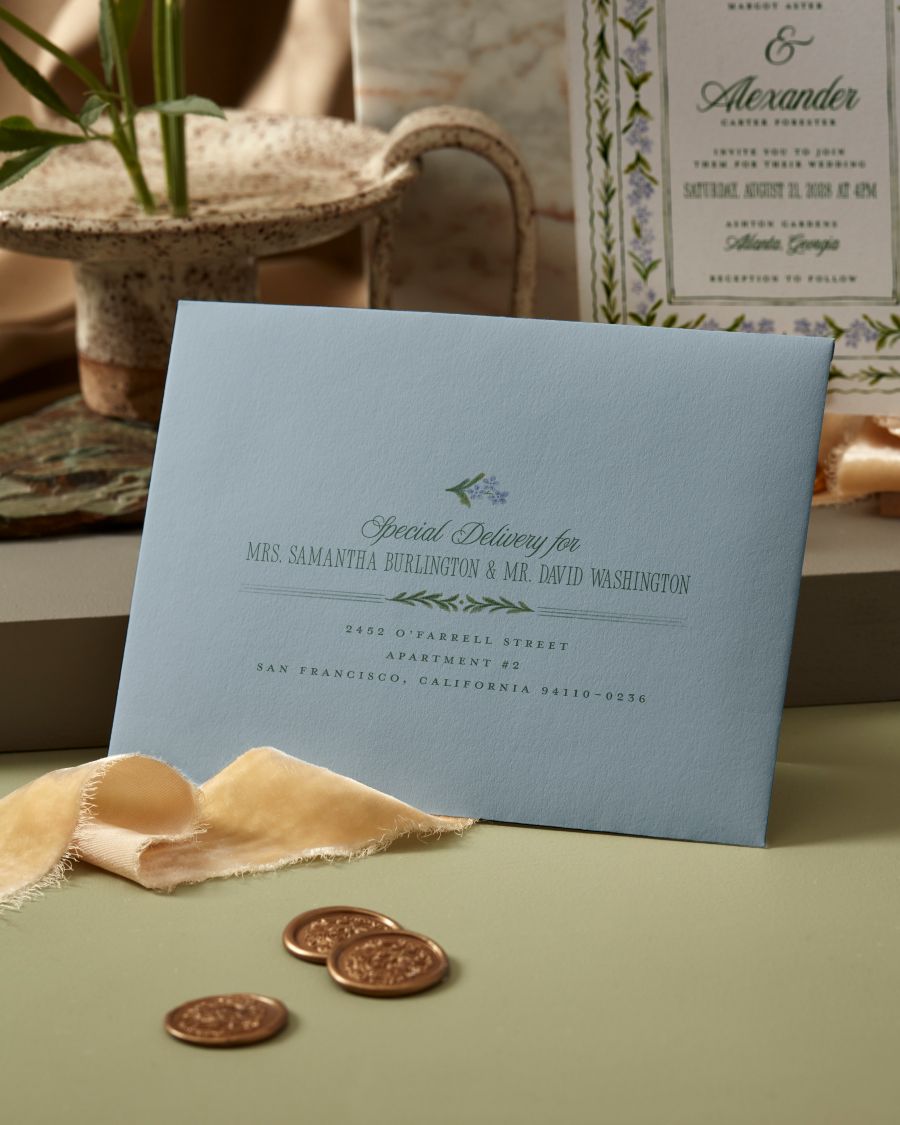
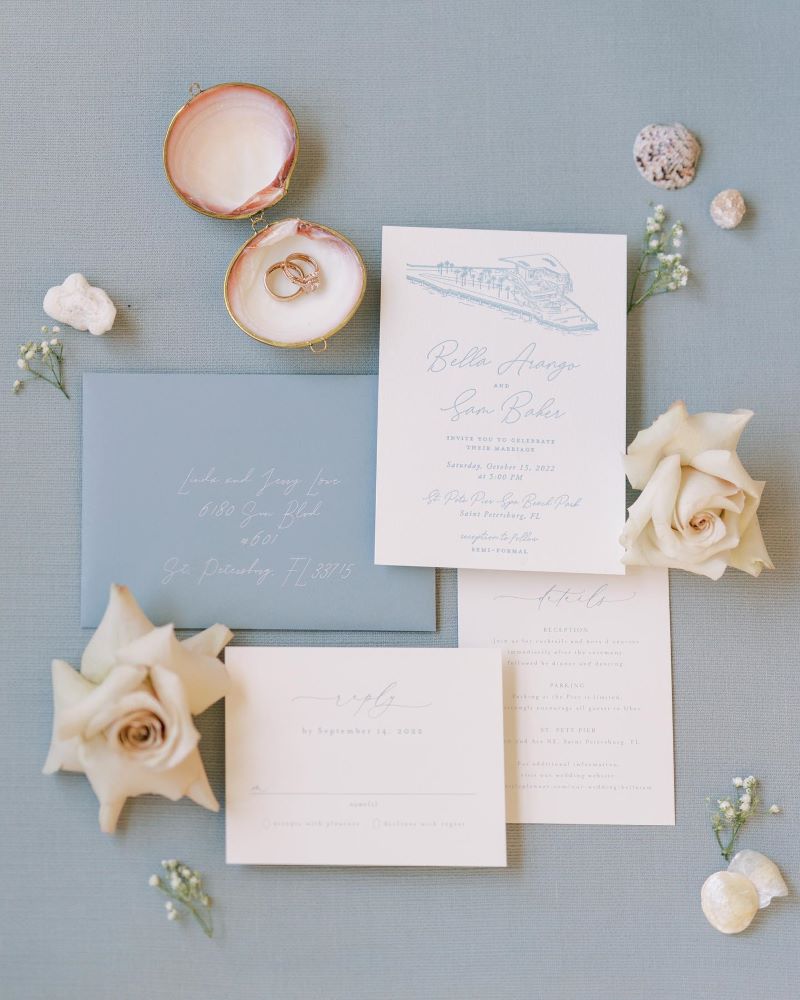
Vintage Sketched invitation by Jenna Holcomb and Floral Crest wax seal by Inkspringletters
Wedding Invitation Mailing Timeline: When to Weigh, Stamp, and Send
Timing your postage prep well in advance prevents last-minute scrambling.
- Assemble a complete sample 14-16 weeks before the wedding: Weigh and price a finished sample to set your postage budget. This gives you time to adjust your suite if costs are higher than expected.
- Buy postage 11-12 weeks before the wedding: Schedule a post office visit to buy the correct stamp denominations. Confirm rates haven't changed since your initial pricing.
- Mail invitations 8-10 weeks before the wedding: Send domestic invitations about 8–10 weeks before your wedding date. Mail earlier for destination weddings or busy holiday seasons.
Build in buffer time for addressing, stuffing, and any last-minute guest list changes. The week before mailing should be reserved for final assembly and quality checks—not stamp shopping.
Postage for Wedding Invitations: Frequently Asked Questions (FAQs)
Planning your wedding invitation mailing can raise questions about postage requirements, especially when you're choosing artistic designs with special features. Here are answers to the most common concerns about getting your cards delivered safely and affordably.
Do square envelopes always cost more?
Yes. USPS classifies all square mail as non-machinable, which means you'll pay the standard letter rate plus the non-machinable surcharge regardless of weight. There's no way to avoid the extra cost with square envelopes.
Is a wax seal guaranteed to trigger a surcharge?
Almost always. Wax seals create rigid, uneven surfaces that can't go through sorting machines. Budget for the non-machinable surcharge unless you place sealed invitations inside a plain outer envelope.
Can I mix old and new stamp denominations?
Absolutely. Forever stamps retain their value regardless of when you purchased them. Combine older stamps with current additional-ounce or non-machinable stamps to reach your exact postage total.
What if my suite weighs exactly 1.0 oz vs. 1.1 oz?
That 0.1 oz difference matters. At exactly 1.0 oz, you pay the standard letter rate. At 1.1 oz, you move into the additional-ounce tier. When weights are borderline, round up or remove a small element to stay under the threshold.
Should I hand-cancel dark envelopes with white ink addressing?
It's a smart precaution. Machine processing can scuff or smear ink, and white ink on dark envelopes is especially vulnerable. Hand-canceling protects your calligraphy and ensures crisp delivery.
How early should I mail international invitations?
Send international invitations 1–2 weeks earlier than domestic ones. International mail requires customs processing and has longer transit times. Earlier mailing also allows time for any issues to surface before your RSVP deadline.
What happens if I under-stamp by a small amount?
Invitations with insufficient postage get returned to you—not delivered. USPS doesn't notify senders about returns. You'll need to add correct postage and re-mail in fresh envelopes, which costs time and money.
Seal, Stamp, and Send With Confidence
Getting postage right means your beautifully designed suite arrives exactly as you intended—no returns, no last-minute panic, no guesswork. Weigh a complete sample, confirm your exact postage at the counter, and buy the right stamp denominations before you start assembling. That's it. Everything else is just details.
Ready to design your suite? Explore customizable wedding invitations from independent artists at Minted.