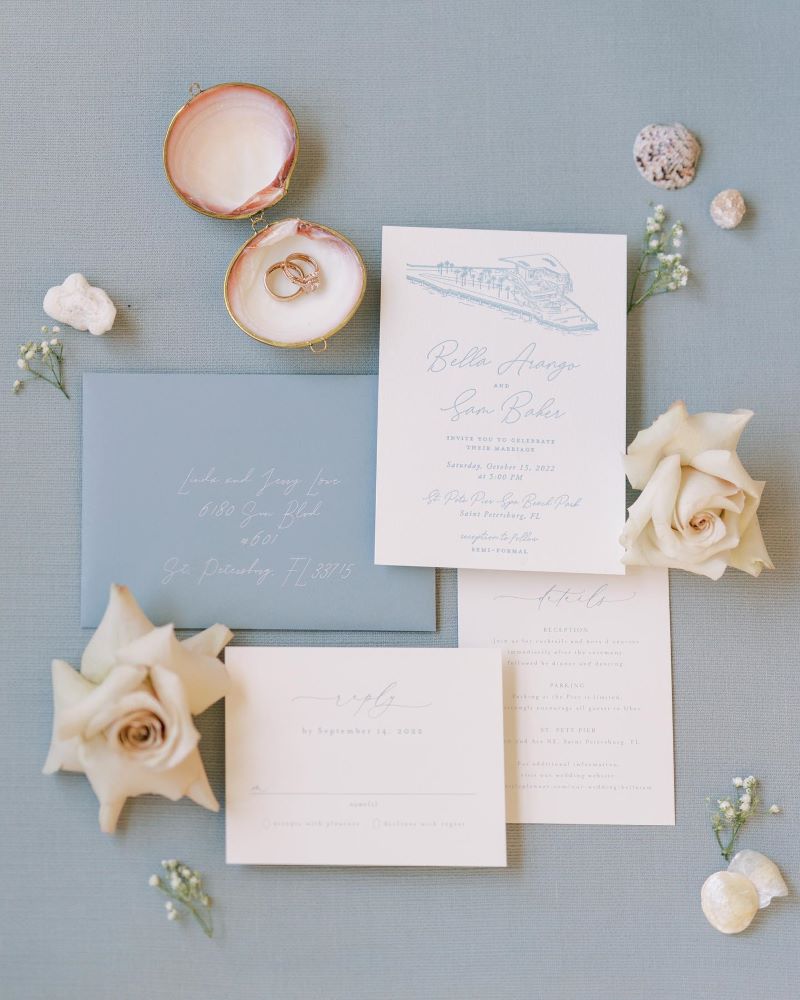

Key Takeaways:
- Classic wedding invitation envelopes provide a timeless foundation that can be easily personalized with thoughtful upgrades, such as liners, colored paper, or wax seals.
- Limiting envelope customizations to one or two standout elements creates a polished, cohesive look while avoiding postal complications and extra costs.
- Testing a fully assembled invitation before mailing your full batch ensures your chosen details survive transit and meet postage requirements.
Your guests form their first impression before they even open your invitation. Wedding invitation envelopes set expectations and build anticipation from the moment they arrive in the mailbox, offering a first hint of the celebration to come.
At Minted, our classic envelope styles are designed to provide a timeless foundation that leaves room for personalization without creating mailing complications. Thoughtful details such as envelope liners, color choices, wax seals, and coordinated addressing can transform standard formats into something that feels distinctly personal. Below, we break down envelope sizes, liners, colors, sealing options, addressing approaches, postage considerations, and finishing touches that balance visual impact with reliable delivery.
Wedding Invitation Envelopes: The Basics
Most classic wedding invitation envelopes follow the A7 format, measuring 5¼" x 7¼", which fits standard 5" x 7" invitations with room to spare. This size keeps ordering simple and helps avoid extra postage fees that can come with non-standard dimensions. Flap styles typically fall into two categories: square flaps, which create a clean, structured look, and Euro flaps, which feel softer and more romantic. Both styles are commonly used across a wide range of wedding aesthetics, from casual outdoor ceremonies to formal evening events.
In addition to the standard A7 format, wedding invitations are sometimes paired with other envelope sizes depending on layout, orientation, or overall design approach. The table below outlines common envelope types, their dimensions, typical uses, and postage considerations.
| Envelope Type | Size (inches) | Typical Invitation or Insert Size | Postage Requirements |
|---|---|---|---|
| Petite | 4.5" x 6.25" | Small-format invitations or minimalist designs | Standard postage |
| A7 (Standard Invitation) | 5.25" x 7.25" | Most standard wedding invitations (5" x 7") | Standard postage |
| Standard Square | 5.5" x 5.5" | Square invitations | Additional postage required due to square shape |
| Grand Square | 6.25" x 6.25" | Larger square or visually bold invitation designs | Additional postage required |
| Grand | 8.3" x 6.01" | Oversized invitations or layouts that should not be folded | Often requires additional postage depending on weight |
| A2 Euro (Enclosure Cards) | 4.375" x 5.75" | RSVP cards, details cards, or small enclosure inserts | Standard postage |
Euro flaps appear on both rectangular and square envelopes and are distinguished by their rounded shape rather than by size. The choice between square and Euro flaps is primarily aesthetic and does not change the envelope’s dimensions or mailing classification.
The traditional two-envelope setup, with an inner envelope placed inside an outer envelope, adds ceremony while serving practical purposes. The outer envelope carries the mailing address and postage, while the inner envelope protects the invitation and clarifies who is invited, such as listing household members or specific names.
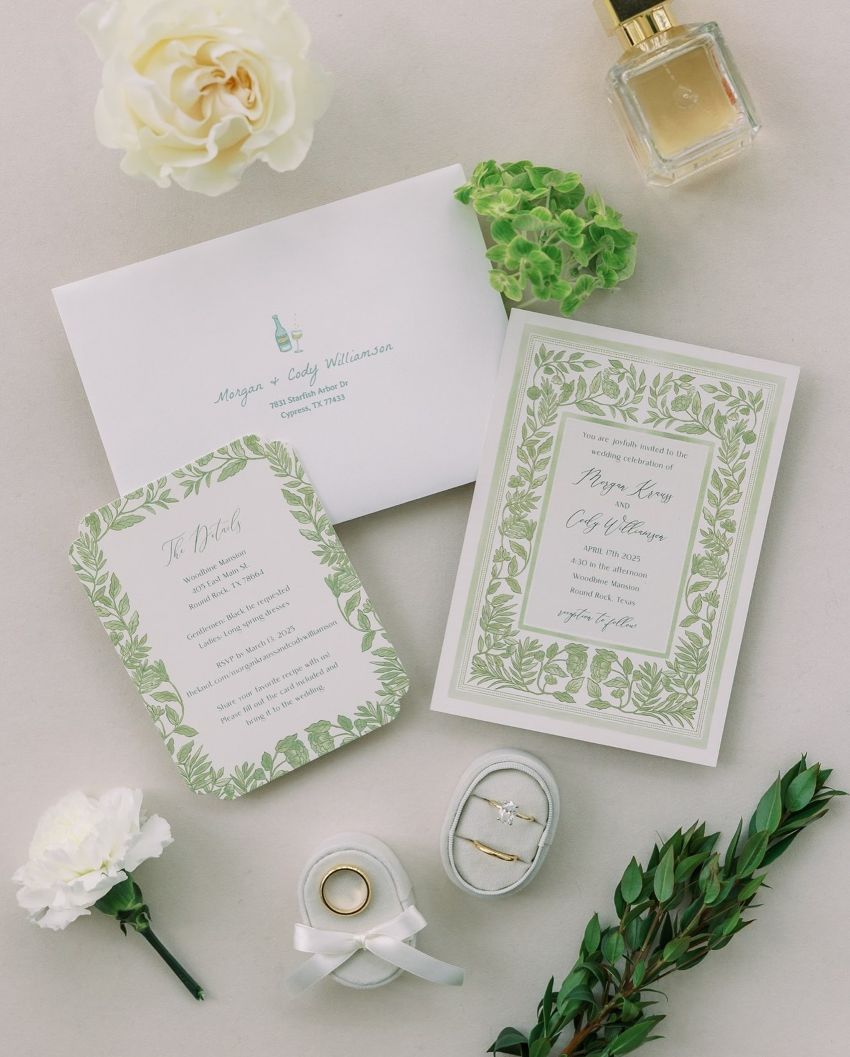
Porcelain Floral wedding invitation and Porcelain Floral detail card by Elly
Photo by Woodbine Mansion
Making Wedding Invitation Envelopes Your Own
The secret to stunning custom wedding invitation envelopes lies in restraint. Pick one or two standout upgrades, like envelope liners that add a pop of pattern, wax seals for vintage charm, or colored envelopes that hint at your palette, rather than layering on every possible detail. This approach creates a polished first impression without turning assembly into a weekend project. Envelope liners typically add just $1-$2 per envelope, making them an affordable way to elevate your suite.
Your envelope details should work as a preview of your wedding day. Coordinate fonts, colors, and textures with your invitation suite so guests immediately sense your vibe, whether that's garden party casual or black-tie formal. Choose upgrades that look beautiful but can handle real-world mailing conditions.
Envelope Colors
Envelope color plays a quiet but powerful role in setting expectations. Before a single word is read, the shade of the envelope signals whether a wedding feels classic, modern, romantic, or bold, while still allowing the invitation design to take center stage.
- Classic whites and soft neutrals. White, champagne, and light gray tones feel timeless and formal, making them a natural choice for traditional or black-tie weddings.
- Warm earth tones and kraft-inspired colors. Speckletone kraft, husk, beige, and brown shades add texture and warmth, often used for rustic, organic, or understated invitation styles.
- Soft pastels and muted hues. Blush, cloud blue, sage, and light teal create an airy, romantic feel that works well for garden, coastal, or daytime celebrations.
- Deep, saturated colors. Navy, black, plum, and rich jewel tones feel dramatic and polished, lending themselves to evening weddings or more formal settings.
- Subtle metallic and shimmer finishes. Silver and softly reflective envelopes introduce a refined accent without overwhelming the overall design.
Before you make your final color selection, consider how the hue of your envelopes will influence addressing and mailing. Darker shades typically require higher-contrast addressing, such as white ink or labels, to ensure readability. Because color can shift under different lighting and alongside other stationery elements, reviewing samples before finalizing a choice helps confirm that the envelope supports the full suite and the guest experience.
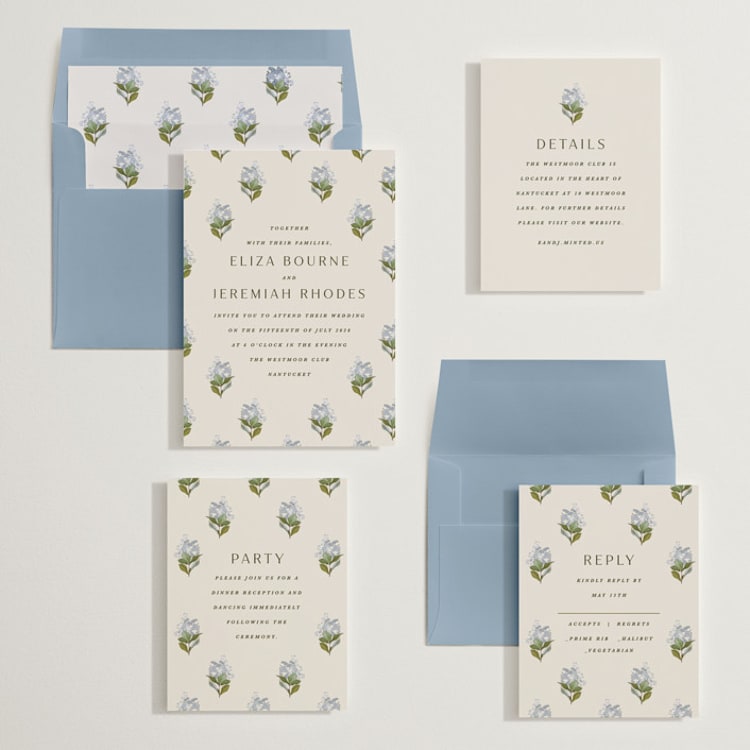
Wax Seals
Wax seals add texture and a sense of tradition to wedding invitation envelopes, serving as a decorative accent that draws attention without overwhelming the design. Historically used to mark important correspondence, wax seals today function as a visual finishing touch that reinforces the tone of the invitation suite.
- Monogram wax seals. Featuring initials or a shared monogram, these styles feel classic and personal, often used with formal or traditional invitation designs.
- Floral and botanical wax seals. Designs inspired by flowers or foliage pair naturally with romantic, garden, or botanical invitation styles.
- Crest and emblem designs. Heraldic or crest-style seals lend a formal, old-world feel and are often chosen for black-tie or traditional weddings.
- Geometric and minimal motifs. Clean shapes and simple symbols work well with modern or minimalist invitation suites.
- Color-driven wax seals. Wax seals are available in both traditional tones, such as ivory or red, and contemporary colors that coordinate with the overall wedding palette.
When selecting wax seals for mailed invitations, it is important to consider application method, flexibility, and postage requirements. Self-adhesive seals simplify assembly and travel more reliably through the mail, while hand-poured seals require careful handling and testing. Mailing one fully assembled invitation to yourself helps confirm durability and postage before completing the full batch.
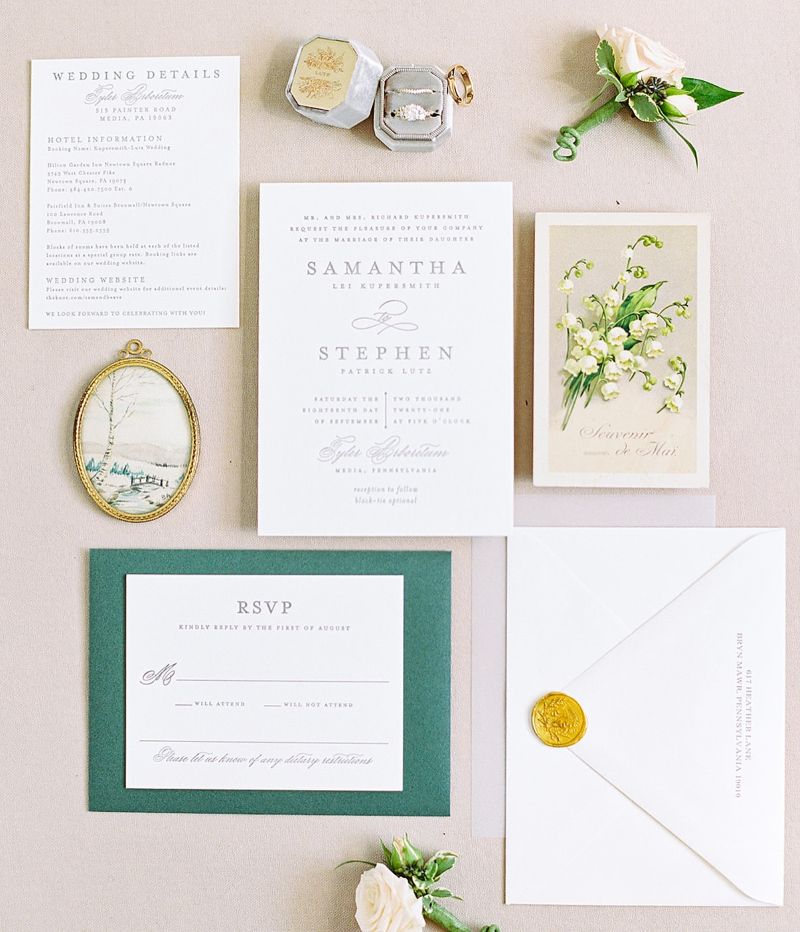
classic composition details card, classic composition wedding invitation, and classic composition RSVP card by Olivia Raufman
Photo by Deevents
Addressing
Minted’s recipient addressing options offer a budget-friendly way to elevate wedding envelopes immediately, with a curated selection of typographic styles designed to pair seamlessly with different invitation designs. These printed options keep addressing consistent across every envelope while allowing couples to choose lettering that feels classic, modern, or understated.
For couples who want addressing to feel more expressive or decorative, custom address labels or working with a professional calligrapher opens the door to more personalized styles, textures, and embellishments.
- Calligraphy. Flowing script designs feel traditional and formal, pairing well with classic invitation suites and black tie affairs.
- Typographic. Clean lettering and minimal layouts complement modern or minimalist invitation designs and keep the overall presentation understated.
- Handwritten. Casual, handwritten-style lettering creates a personal, approachable feel without requiring each envelope to be written by hand. Printed handwritten fonts offer the charm of handwriting with the consistency and efficiency of recipient addressing.
- Illustrated and floral designs. Botanical motifs and hand-drawn illustrations add softness and visual detail, often used with romantic or garden-inspired invitations.
- Bow and ornamental styles. Decorative elements such as bows or subtle embellishments support romantic or vintage-inspired aesthetics without overwhelming the envelope.
- Monogram designs. Initials or shared monograms create a personal but structured look that works well with formal or heritage-style invitations.
Stamps and labels are best suited for return addresses, since using a stamp for recipient addressing would require a custom design for every individual guest. For sender information, however, stamps offer an easy way to add personality and visual interest without adding complexity. Self-inking and wood-mounted stamps are popular choices for return addresses because the same stamp can be used across every envelope. Self-inking stamps offer speed and consistency, while wood-mounted stamps allow for more control over ink and pressure. Regardless of the approach, return addresses should maintain a clear contrast against the envelope color to ensure readability in the mail. Testing one addressed envelope before completing the full batch helps confirm placement and clarity.
Minted’s return addressing options also allow couples to print their return address directly on the envelope in a style that matches their chosen recipient addressing, keeping everything cohesive from front to back.
Postage Stamps
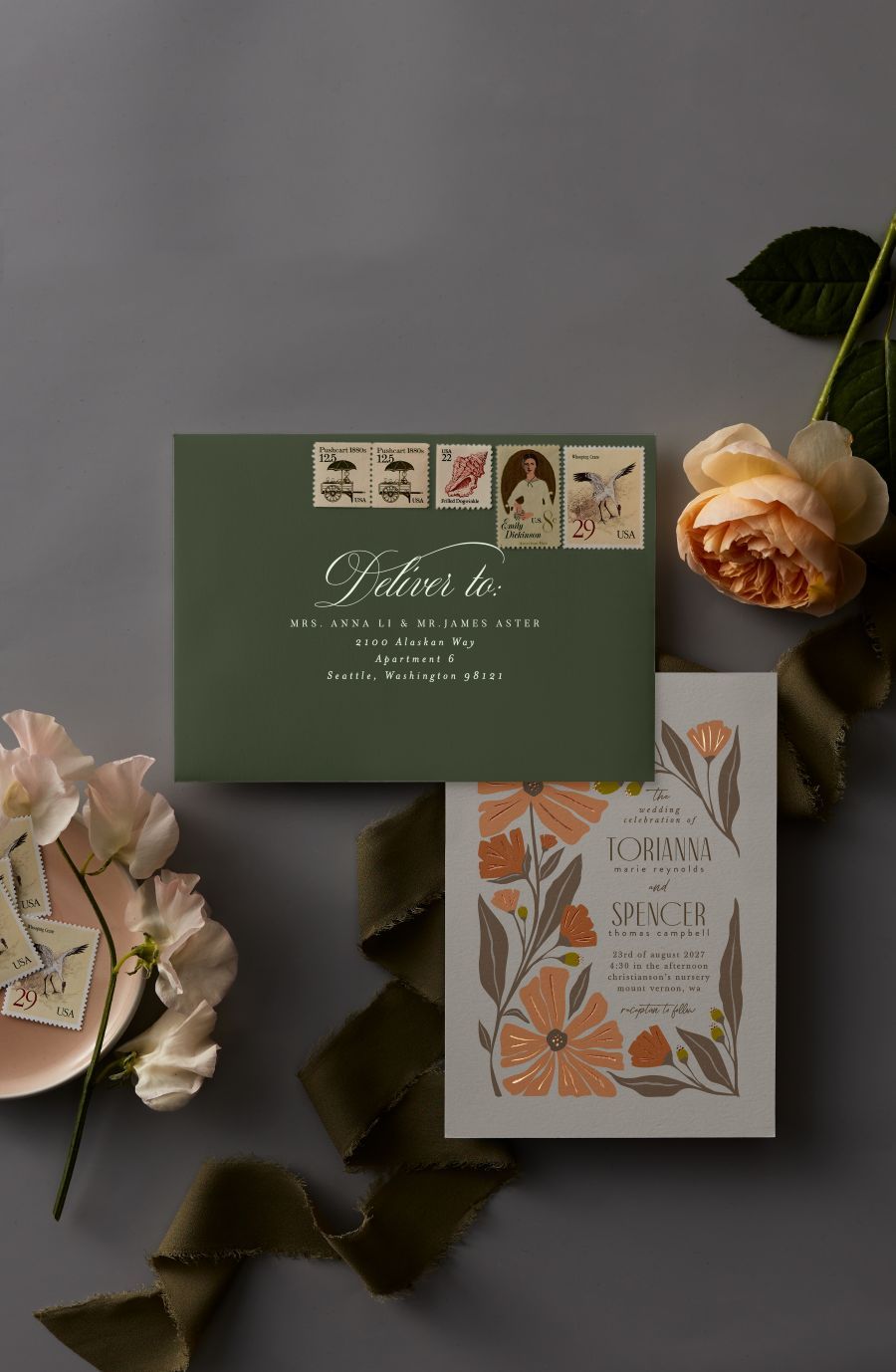
Postage stamps may be functional, but they also act as a finishing design element that draws the eye and completes the envelope presentation. Their artwork, color, and composition often become one of the most noticeable details once the invitation is in hand.
- Floral and botanical designs. Flowers, greenery, and garden-inspired stamps bring softness and romance to the envelope, pairing naturally with botanical, watercolor, or nature-forward invitation suites.
- Garden party and nature motifs. Birds, butterflies, foliage, and outdoor scenes feel light and organic, making them a natural match for spring weddings, outdoor celebrations, or relaxed design styles.
- Coastal and destination-inspired imagery. Stamps featuring sailboats, lighthouses, shorelines, or scenic landscapes subtly reference place and mood, supporting destination or coastal wedding themes without adding extra imagery elsewhere.
- Seasonal and holiday designs. Evergreens, poinsettias, wreaths, and other seasonal illustrations align well with winter weddings or celebrations held near the holidays, reinforcing timing through visual cues.
- Classic and monochromatic stamps. Black-and-white imagery, portraits, architectural scenes, or simple illustrations feel timeless and restrained, complementing formal, minimalist, or editorial invitation designs.
- Vintage stamp sets. Curated combinations of older postage stamps create a layered, collected look that can make envelopes feel especially distinctive. While visually striking, vintage stamps are often more expensive and may require additional time to source enough total postage, particularly for larger guest lists.
From a practical standpoint, stamp selection should reflect the completed invitation suite. Reviewing postage alongside the final envelope color, liner, and addressing helps ensure the stamps feel visually balanced and integrated rather than added as an afterthought.
Envelope Liners
Wedding invitation envelope liners add pattern and color inside a classic envelope, creating visual interest while keeping the exterior clean and understated. Liners are often chosen to reflect the invitation’s design style (and many of Minted’s wedding invitation designs come with coordinating liner options) without altering the envelope’s overall silhouette.
- Botanical and hand-drawn liners. Floral illustrations and organic linework pair naturally with romantic, garden, or nature-inspired invitation suites.
- Modern and minimalist styles. Clean patterns, soft washes, and restrained designs support contemporary invitations while maintaining a polished look.
- Rustic and vintage-inspired liners. Textural prints, muted palettes, and nostalgic motifs complement softer color stories and traditional wedding aesthetics.
- Bold, typographic, and pattern-forward designs. Graphic patterns and statement typography create visual impact and work well with layered or design-forward invitation suites.
- Cultural and destination-inspired liners. Styles referencing place, heritage, or setting allow couples to incorporate meaning and location without adding imagery to the invitation itself.
Liners are designed to sit inside the envelope (you’ll need to insert them yourself in most cases) and are most effective when key design elements appear near the flap opening. Proper spacing at the bottom ensures the invitation slides in and out smoothly while keeping the liner visible where it matters most.
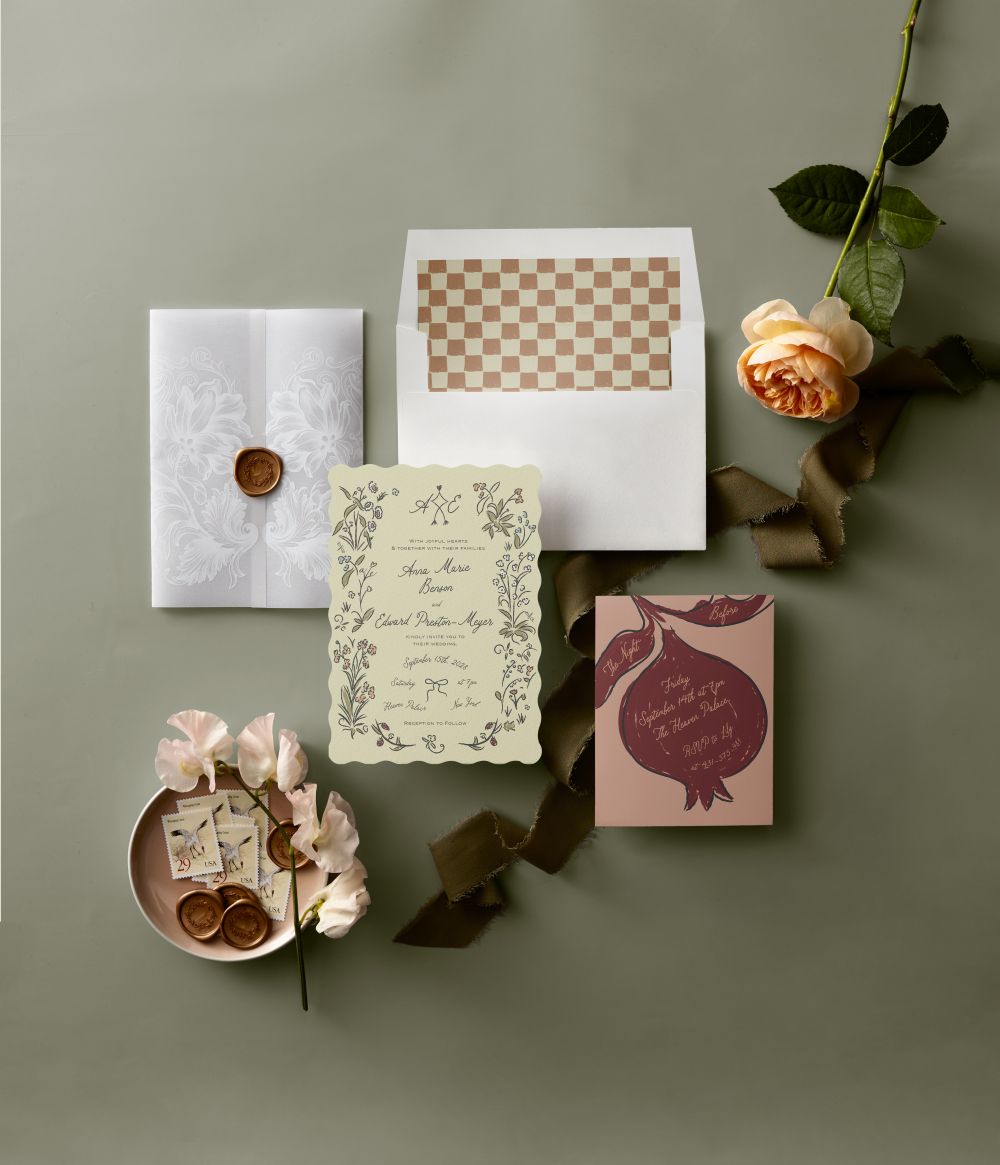
Love Rests in a Garden wedding invitation by Helena Vitto, Holiday Wreath in Gold wax seal by Melanie Kosuge, Checker Wash envelope liner by Baumbirdy
Vellum Jackets
Invitation jackets wrap the invitation suite in a translucent outer layer, adding structure while softening the overall presentation. Vellum jackets are commonly used for formal or layered invitation suites, where they help bring multiple pieces together without adding heaviness.
- Botanical and floral jackets. Designs featuring flowers, branches, leaves, or meadow-inspired artwork pair naturally with romantic, garden, or seasonal weddings.
- Scenic and landscape styles. Jackets with forests, vineyards, coastlines, or horizon imagery are often used for destination weddings or celebrations tied to a specific setting.
- Minimal and understated designs. Light washes, subtle textures, or near-transparent vellum styles complement classic and minimalist invitation suites without competing with the main design.
- Crest and emblem styles. Jackets featuring shields, wreaths, or formal motifs add structure and work well with traditional or formal wedding aesthetics.
- Decorative and statement jackets. Lace-inspired patterns, foil accents, or bold illustrations are typically chosen for layered suites where the jacket serves as a focal design element.
Invitation jackets help keep cards aligned and protected inside the envelope. Vellum adds softness and translucency while allowing the invitation design beneath to remain visible. Jackets are especially well-suited for formal weddings, multi-piece suites, or designs that benefit from an added layer of structure. As with any layered element, assembling and mailing one complete sample helps confirm fit, thickness, and postage before finalizing the full set.
Belly Bands
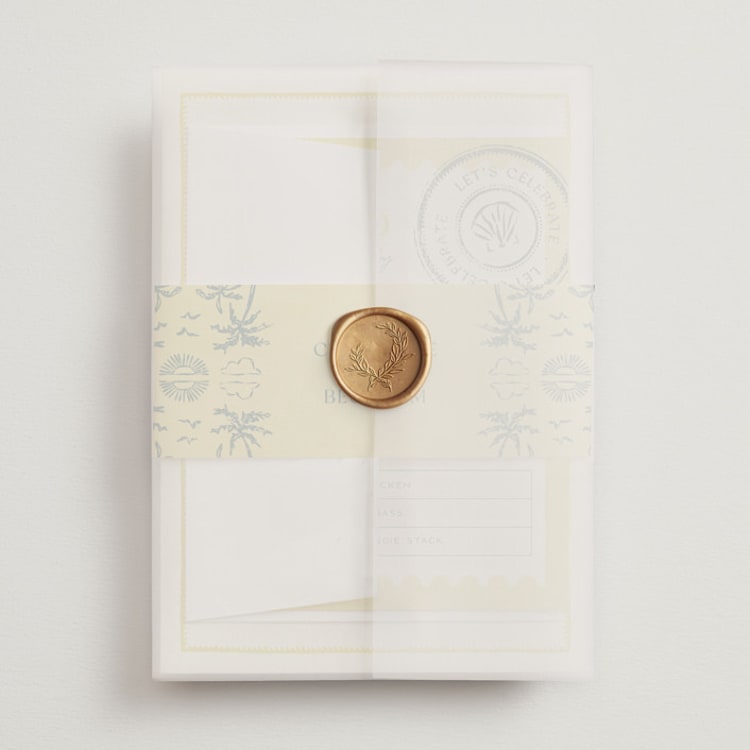
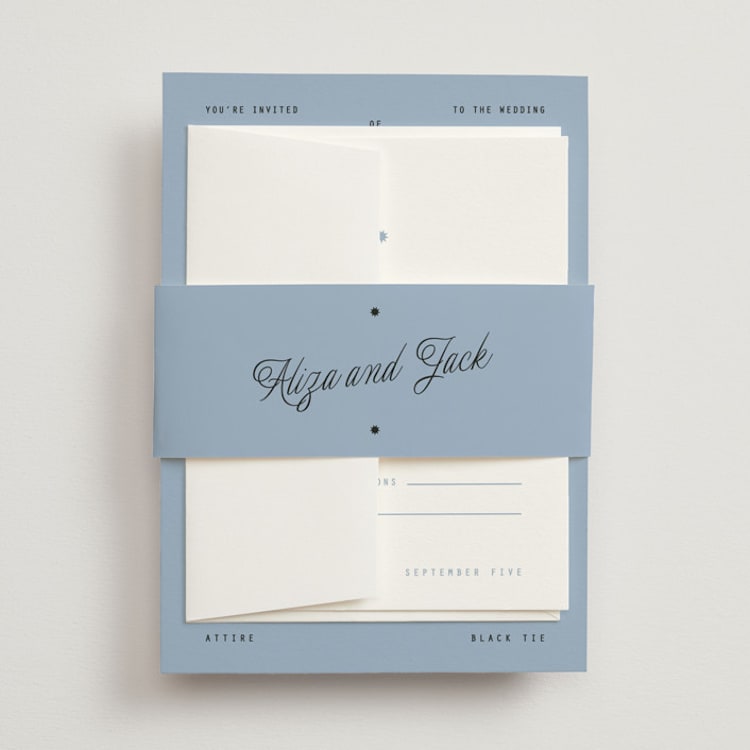
Wedding invitation belly bands wrap around the invitation suite to keep multiple cards together while adding a decorative layer to the presentation. They are often used when a suite includes several enclosure cards or if you want to include a subtle design accent (many of Minted’s wedding invitation designs can be paired with coordinating belly bands), without adding bulk.
- Monogram belly bands. Designs featuring initials or shared monograms create a classic, polished look that works well with formal or traditional invitation suites.
- Floral and botanical styles. Illustrated flowers, vines, and greenery add softness and pair naturally with romantic, garden, or seasonal weddings.
- Scripted and typographic designs. Bands with names, dates, or flowing script typography complement elegant or calligraphy-forward invitations.
- Patterned and decorative bands. Block prints, stripes, or ornamental motifs add visual interest and are often used with eclectic or design-forward suites.
- Whimsical and illustrated styles. Playful artwork, crests, or symbolic illustrations work well for couples who want personality and charm woven into their stationery details.
Belly bands are most commonly made of paper or vellum, with vellum offering a softer, translucent look. They are sized to wrap around a fully assembled invitation stack and typically secure with an adhesive strip or sticker, although you could also secure them with a wax seal for a luxe touch. Because thickness and overlap can affect mailing, assembling and mailing one complete sample helps confirm fit, durability, and postage before preparing the full set.
Ribbons
If you like the idea of a belly band, but want a more romantic option, ribbons are a great way to add softness and dimension to a wedding invitation suite. As a design element, ribbons are often used to reinforce the overall aesthetic of the suite and work especially well for romantic or editorial-inspired weddings.
- Classic and solid-color designs. Simple, single-color ribbons create a timeless look and support traditional or formal invitation suites without competing with the main design.
- Patterned and decorative styles. Gingham, block prints, or repeating floral motifs add visual interest and are often used for relaxed, countryside, or design-forward weddings.
- Whimsical and illustrated designs. Playful artwork, small icons, or hand-drawn details bring personality and charm to informal or creative invitation suites.
Ribbons are available in a variety of materials and widths, and the way they are tied can affect both bulk and durability in the mail. Because ribbons add dimension, assembling and mailing one complete invitation is the best way to confirm fit, handling, and postage before preparing the full set.
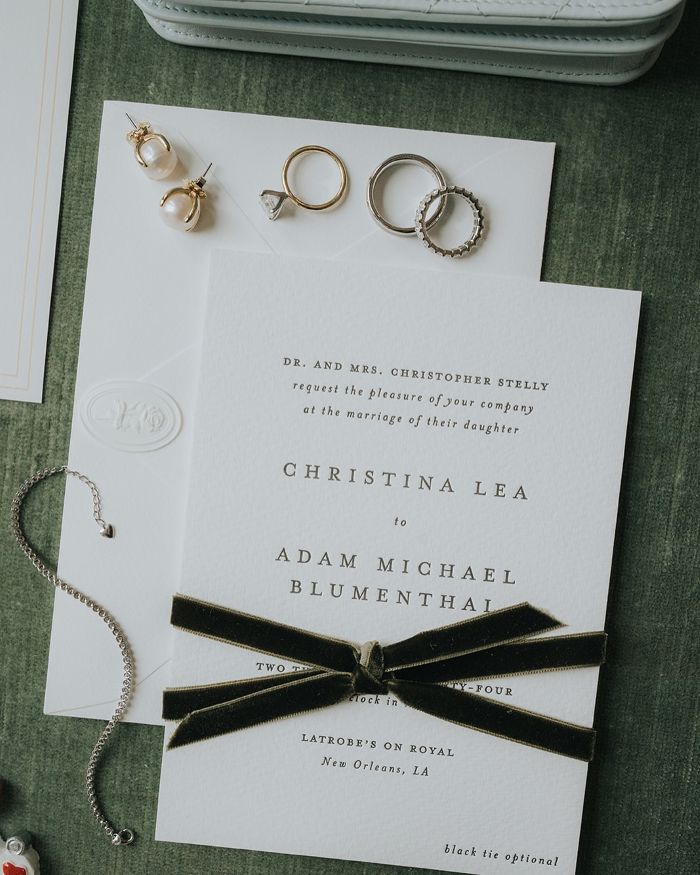
A Thousand Years wedding invitation by Design Lotus
Photo by Elyse Jennings Weddings
Wedding Invitation Envelope FAQs
Planning envelope details brings up common questions about costs, timing, and what actually works in the mail. These answers help you make smart choices that balance style with function and budget.
When should envelope details be finalized in the stationery timeline?
Finalize envelope choices when you order invitations, 3-4 months before your wedding. Allow 2-3 weeks for addressing if hiring a calligrapher. Order 10-15% extra envelopes to account for addressing mistakes and assembly practice runs.
How can wedding invitation envelopes be customized on a budget?
Start with envelope liners or colored envelopes; both add major visual impact without stretching your budget. Address labels and coordinated postage stamps create a polished look for less than premium wax seals or custom jackets. Focus on one standout element rather than layering multiple accessories.
Which envelope details make the biggest visual impact?
Envelope liners create the most dramatic reveal when guests open the flap. Colored envelopes set the tone immediately, while wax seals add texture and ceremony. These three elements influence first impressions more than smaller touches like address labels or postage choices.
Should envelope colors match the invitation exactly?
Colors should coordinate, but don't need to match perfectly. Choose envelope colors that complement your wedding palette rather than competing with your invitation design. Neutral envelopes let bold invitations shine, while colored envelopes can introduce accent colors from your overall theme.
What envelope customizations work best for formal weddings?
Traditional choices include ivory or white envelopes with classic liners, wax seals with monograms or crests, and formal addressing. Inner and outer envelope sets add ceremony. Avoid overly casual elements like bright colors or playful graphics for black-tie events.
Do liners, jackets, or wax seals affect postage costs?
Yes, they can increase thickness and weight. Take a fully assembled invitation to the post office to determine the exact postage before ordering stamps. Square envelopes always require extra postage, and thick embellishments may trigger extra fees for hand-processing.
Are dark or colored envelopes harder to address or mail?
Colored envelopes mail fine as long as the address text has sufficient contrast for postal machines to read. Use white ink or high-contrast address labels on dark envelopes.
Can multiple envelope accessories be combined without overwhelming the design?
Stick to 2-3 coordinated elements maximum. A liner plus wax seal works beautifully, or try colored envelopes with coordinated postage. More than three accessories can feel busy and significantly increase postage costs. Test-mail one complete sample before assembling all invitations.
Making Wedding Invitation Envelopes Feel Intentional
Your wedding invitation envelopes work hardest when you keep the foundation simple and add just the right touches. A classic A7 envelope with one or two thoughtful upgrades like envelope liners, coordinated colors, or a wax seal creates that polished first impression without overwhelming your guests or your budget.
Before you send your full batch, do a complete test mail with your finished envelope, addressing, and postage. This simple step catches any legibility issues, confirms postage amounts, and ensures your carefully chosen details survive the journey to your guests.
Ready to create envelopes that feel as purposeful as your love story? Explore the Minted Luxe Envelope collection and bring your vision together from the first glimpse to the final detail.